

Arabic Language Classes Online
Reciting the Quran correctly is one skill. Understanding what you’re actually reading, word by word, is another — and it’s entirely learnable.
“Indeed, We have sent it down as an Arabic Qur’an that you might understand.”
— Surah Yusuf 12:2
This verse states plainly why Arabic matters: the Quran was revealed in Arabic specifically so it could be understood directly, not only recited. Learning the language itself — not just memorizing sounds — is how that understanding actually happens.
Why Learn Arabic Beyond Just Reciting the Quran
Millions of Muslims can recite the Quran beautifully with correct Tajweed without understanding a single word they’re saying. That’s not a criticism — Tajweed and comprehension are genuinely separate skills, and mastering recitation first is a completely valid starting point. But at some stage, many students reach a point where they want more: to actually understand the meaning behind the words they’ve been reciting for years.
A qualified Arabic language tutor bridges that exact gap. Rather than relying entirely on translations — which necessarily lose nuance — learning Quranic and classical Arabic directly lets you engage with the text itself, understand why a particular word was chosen, and follow scholarly explanations (Tafseer) with far greater depth. This is a genuinely different experience from reading a translated Quran, in the same way reading poetry in its original language differs from even the best translation of it.
Is Learning Arabic Necessary If I Already Read the Quran with Tajweed?
Not strictly necessary, but genuinely valuable. Correct Tajweed ensures you’re reciting the words as revealed; Arabic comprehension lets you understand what those words mean. Many long-time Quran reciters describe learning Arabic later in life as transformative — verses they’d recited for years suddenly carried new depth once the vocabulary and grammar made sense. If you’ve ever finished a prayer and realized you couldn’t actually explain what the surah you just recited meant, that gap is exactly what a dedicated arabic language tutor is for.
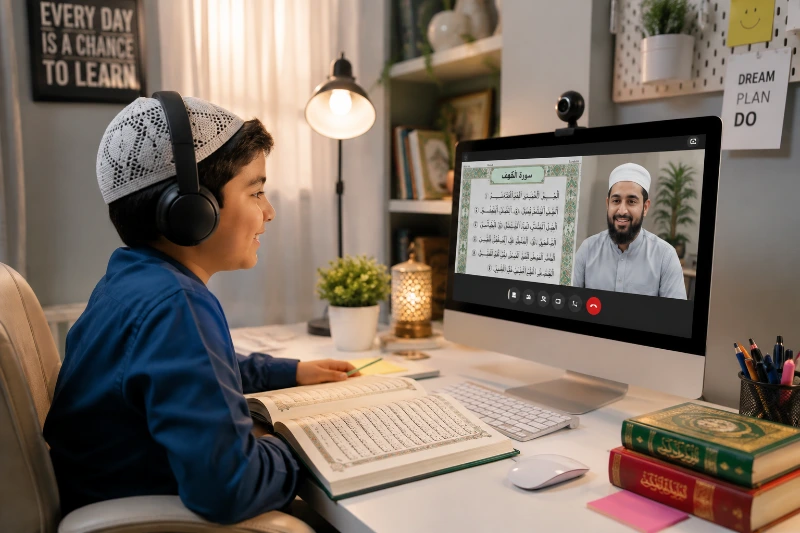
Understand, Not Just Recite
Learning the words behind the recitation turns a familiar surah into something newly meaningful.
The Real Challenge Most Adults Face With Arabic
For English-speaking adults in the USA, Arabic can feel intimidating in a way few other languages do — a different alphabet, a different direction of writing, and grammar rules with no direct English equivalent. This is precisely where a poorly matched course does the most damage: a fast-paced group class or a generic app that assumes prior familiarity can leave a genuine beginner more discouraged than when they started. We also offer a lighter arabic conversation course track for students who want everyday speaking skills alongside their Quranic studies.
A private arabic language tutor removes that risk entirely. Lessons start exactly where you are — including from zero, with no assumed prior exposure to the script — and build at a pace shaped around your actual comprehension, not a fixed syllabus designed for an average learner who doesn’t exist. If your goal leans more toward everyday speaking than Quranic grammar, ask about our arabic conversation course option instead.
What an Arabic Language Tutor Actually Teaches
A structured Arabic course with a private arabic language tutor typically moves through distinct stages, building steadily rather than overwhelming a beginner with grammar on day one:
Alphabet & Pronunciation
For students without prior Arabic reading ability.
Core Vocabulary
Starting with words that appear frequently in the Quran and daily Islamic life.
Basic Grammar (Nahw & Sarf)
Sentence structure and word formation, taught gradually and practically.
Reading Comprehension
Applying vocabulary and grammar directly to Quranic verses and classical texts.
This structure is deliberately different from a general-purpose language app. The focus here is specifically Quranic and classical Arabic — the register of Arabic that actually appears in the Quran, Hadith, and classical Islamic scholarship — rather than modern conversational dialects alone. This distinction matters more than most beginners realize: an arabic language tutor focused on Modern Standard Arabic or a regional dialect will not necessarily prepare you to read the Quran, since Quranic Arabic has its own specific vocabulary and grammatical conventions.
How Long Does It Take to Understand Quranic Arabic?
This varies significantly depending on your goals. Recognizing common Quranic vocabulary and following basic sentence structure can happen within several months of consistent study. Deeper grammatical fluency — the kind needed to independently parse complex verses — typically takes years, the same way fluency in any language does. A good tutor sets realistic milestones rather than promising rapid mastery.
Do I Need Any Prior Islamic Studies Background to Start?
No. Arabic language instruction and Islamic studies knowledge are related but separate — you don’t need prior familiarity with Fiqh, Hadith, or Tafseer to begin learning Arabic itself. Many students actually learn Arabic specifically as groundwork before diving deeper into those subjects, since understanding classical Arabic makes later Islamic studies significantly more accessible and meaningful.
Your Pace, Not the Classroom’s
One-on-one tutoring means your progress is set by you — not the fastest or slowest student in a group.
Private Arabic Tutoring, Not a Group Class
Group language classes move at the pace of the slowest or fastest student in the room, which frustrates almost everyone eventually. One-on-one arabic tutoring avoids that entirely — your pace is set by your own progress, not an average across a classroom of strangers with different starting points and different goals. If you’ve tried a group Arabic class before and quietly fallen behind without anyone noticing, private arabic tutoring solves that specific problem directly.
Classes are taught personally by Mufti Shahbaz Hussain, whose scholarly training — including Dars-e-Nizami and a completed Mufti Course — required deep, formal mastery of classical Arabic as a foundational tool of Islamic scholarship itself, not as a separate subject learned casually. This is a meaningfully different level of grounding than a tutor who only speaks conversational Arabic without the classical textual training behind it.
What’s the Difference Between Learning Arabic for Daily Conversation and Learning It for the Quran?
They overlap but aren’t identical. A general arabic conversation course focused on everyday modern dialect will teach you to order food or ask directions, but won’t necessarily prepare you to parse a Quranic verse’s grammar. Classical and Quranic Arabic instruction focuses on the specific vocabulary, grammatical structures, and register that actually appear in the Quran and classical texts — which is a more deliberate, text-focused path than general conversational fluency, though the two skills reinforce each other over time.
Can I Combine Classical Study With Conversational Practice?
Yes, and many students find this combination the most rewarding path. A typical approach pairs classical grammar and Quranic vocabulary study with lighter conversational practice woven in — enough that the language starts to feel usable and alive, not purely academic. Whether to emphasize a conversational style of practice or lean more heavily into classical text study is entirely up to your own goals, and a good tutor will ask directly what you want before designing your specific lesson plan.
Building Block by Block
Alphabet, vocabulary, grammar, comprehension — each stage supports the next.
Who This Course Is For
- Adults who already recite the Quran and want to move into genuine comprehension of meaning
- Students preparing for deeper Islamic studies — understanding Tafseer, Hadith, and classical texts directly requires solid Arabic grounding
- Parents who want to support their children’s Arabic learning at home with real understanding themselves
- Anyone drawn to practical spoken skills, alongside or separate from classical study
For families with children specifically interested in Arabic, see our dedicated Arabic classes for kids, which uses an age-appropriate approach distinct from adult instruction.
Start with a Free Trial Class
See exactly how lessons are structured and ask direct questions about pacing and approach before committing to anything — no pressure, no obligation.
Related Programs
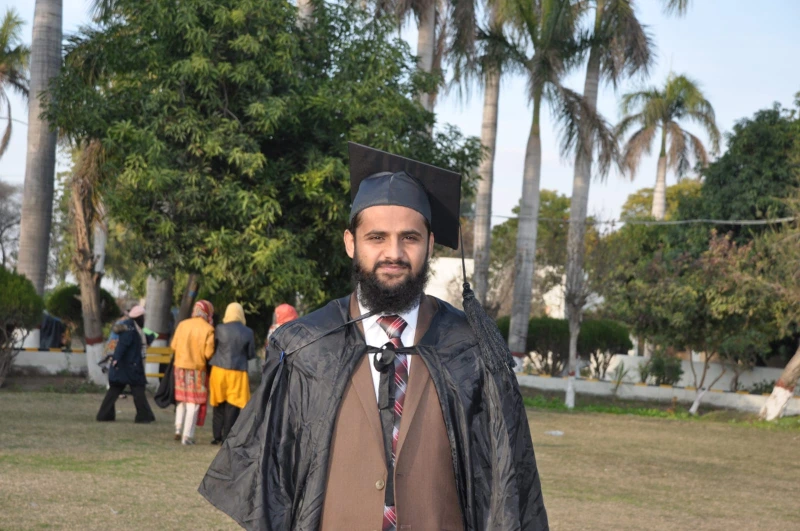
Meet Your Teacher, Mufti Shahbaz Hussain
Classes are taught personally by Mufti Shahbaz Hussain — Hifz, Qirat, Dars-e-Nizami, and Mufti Course, with a specialization in Islamic Business & Finance and Islamic Economics, and 10 years of teaching experience. View his verified credentials.
Frequently Asked Questions
Do I need to already read Arabic script before starting?
No. A good arabic language tutor will start with letter recognition and basic pronunciation if needed, before building toward vocabulary, grammar, and comprehension — the same structured sequence used for complete beginners in any of our programs.
Is this course focused on classical Arabic or modern conversational Arabic?
The primary focus is classical and Quranic Arabic, since that’s the register needed to understand the Quran and classical Islamic texts directly. Conversational elements can be incorporated for students who also want practical spoken skills.
How much does private arabic tutoring cost?
Pricing depends on lesson frequency and length. Contact us for our current rates.
Can children join Arabic language classes too?
Yes, though we recommend our dedicated Arabic classes for kids page, which is structured specifically around how children learn best, distinct from our adult-focused Arabic language tutor sessions.
Will learning Arabic help me understand Tafseer (Quranic commentary) better?
Significantly, yes. Understanding the original Arabic vocabulary and grammar lets you follow scholarly Tafseer explanations with far more depth than relying on translation alone, since much of the nuance and word choice discussed in Tafseer only makes full sense in the original language.
